Sea Breeze or Land Breeze: Two Coastal Patterns Compared
Sea breeze or land breeze? Learn how wind direction and land-water heating reveal the coastal pattern, even when northern daylight shifts the timing.
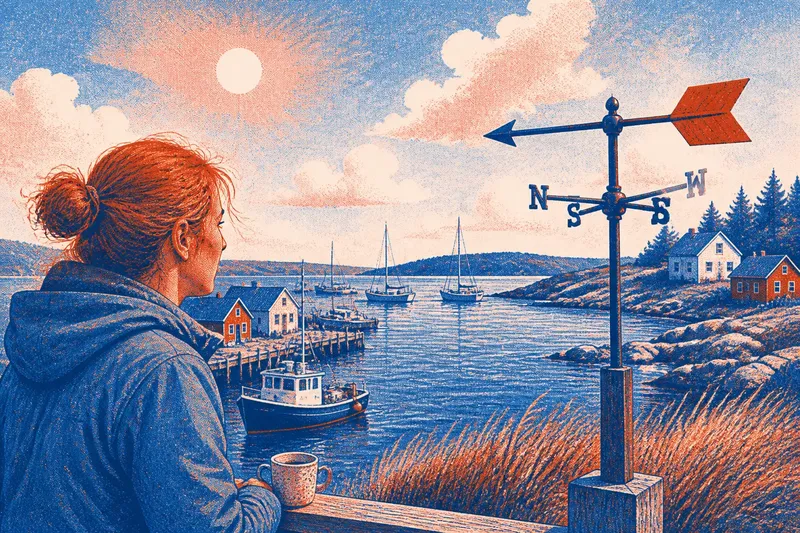
At a northern harbor, a flag may hang slack at breakfast, then pull inland later in the day; after sunset, it can turn back toward the water. That changing wind is a sea breeze or a land breeze, shaped by how the shore and nearby water warm and cool.
To identify the pattern, check the wind’s direction across the shoreline, the time of day, and whether land or water has been warming or cooling faster. The names describe a broad local circulation, not a schedule every beach or harbor follows.
A sea breeze brings daytime air inland from the water
On a sunny day, land usually warms faster than nearby water. Air above the warmer ground rises, and cooler air from over the water moves inland to take its place. That onshore flow is a sea breeze.
The change may be noticeable where open water stays cool while exposed ground warms. A person on shore might feel the wind shift from calm or light offshore air to a breeze coming from the water. How far inland it reaches depends on the heating, the shape of the coast, and larger weather patterns.
Afternoon timing alone is not enough to identify a sea breeze. Check whether the wind is coming from the water and whether land has warmed more quickly than the sea. A wind blowing along the coast may have another cause.
A land breeze carries nighttime air toward the water
After sunset, land generally loses heat faster than water. Air over the ground cools while the water retains warmth longer. The resulting contrast can draw near-surface air from land toward the relatively warmer water, producing a land breeze.
Land breezes are often subtle. The temperature difference may be modest, and a broader weather system can overwhelm the local flow. Near a sheltered inlet or uneven terrain, wind direction can vary from one spot to another.
The land-breeze explanation fits when it is dark, the land is cooler than the water, and the near-shore wind moves offshore. If the wind blows inland after dark, do not call it a land breeze just because it is near the coast.
Unequal heating can reverse the coastal wind
The daily shift comes from land and water changing temperature at different rates. During the day, warmer air over land rises and cooler air flows in from the water. At night, land cools sooner, and the near-surface flow can turn toward the sea.
Think of land and water as two objects on a windowsill: a dark object can warm quickly in sunlight, while a bowl of water changes temperature more slowly. The comparison concerns heating and cooling only; coastal winds also depend on pressure, clouds, terrain, and larger weather patterns.
A cloudy day may limit the sun’s warming of land and make a sea-breeze signal less distinct. The local circulation can strengthen, weaken, or become difficult to separate from the regional wind as the temperature contrast changes.
Match wind direction with the shoreline and conditions
Look for a sea breeze when daytime heating has warmed the land and air is arriving from over the water. Look for a land breeze when the land has cooled after sunset and the near-shore wind is moving offshore. If the direction and conditions do not line up, treat the pattern as uncertain.
Say you are at an invented, hypothetical harbor on a clear afternoon. The land has warmed, and a weather vane shifts from showing wind blowing out over the water to showing air coming in from the bay; the expected result is a more noticeable onshore flow, consistent with a sea breeze. After sunset, imagine the land cools and the vane turns to show wind heading out toward the bay; that combination fits a land breeze, though a stronger regional wind could still complicate the reading.
At a high-latitude coast, daylight can last late into the evening in one season and become brief in another. The sun’s heating is therefore more useful than the clock: a sea breeze depends on land warming relative to water, not on a fixed afternoon hour. Weak sunlight or persistent cloud can limit that contrast.
How can you tell which coastal breeze fits?
Does a sea breeze always begin in the afternoon?
No. Its timing depends on how quickly the land warms and on the existing weather. A weak or delayed onshore flow can be hard to distinguish from other winds.
Why can a land breeze feel weaker?
Nighttime cooling may create a smaller temperature contrast than daytime heating, making the offshore flow less distinct. Local shelter and broader winds also affect what reaches the shore.
Can clouds prevent a sea breeze?
Clouds can limit the sun’s warming of land and soften the temperature difference that drives the circulation. They do not automatically rule out a sea breeze, since other conditions still matter.
Which breeze should you expect near a coast?
Use the wind direction and land-water temperature contrast rather than assuming a fixed daily schedule. Onshore flow linked to daytime land heating fits a sea breeze; offshore flow linked to nighttime land cooling fits a land breeze.
A coastal breeze is a local clue, not a forecast
These patterns help explain a changing shoreline wind, but they do not describe every condition a traveler, boater, or resident may encounter. A larger weather system can dominate the local circulation, and a sheltered bay may behave differently from an exposed headland.
For a quick sea breeze or land breeze check, note which way the wind crosses the shoreline, then consider whether land or water has been warming or cooling faster. If those clues disagree, leave the label open and check a local forecast before making plans on the water.